Accessibility Tools

Skip to main content
2

Lesson 1: Climate Change Impacts on Water Resources in Libya

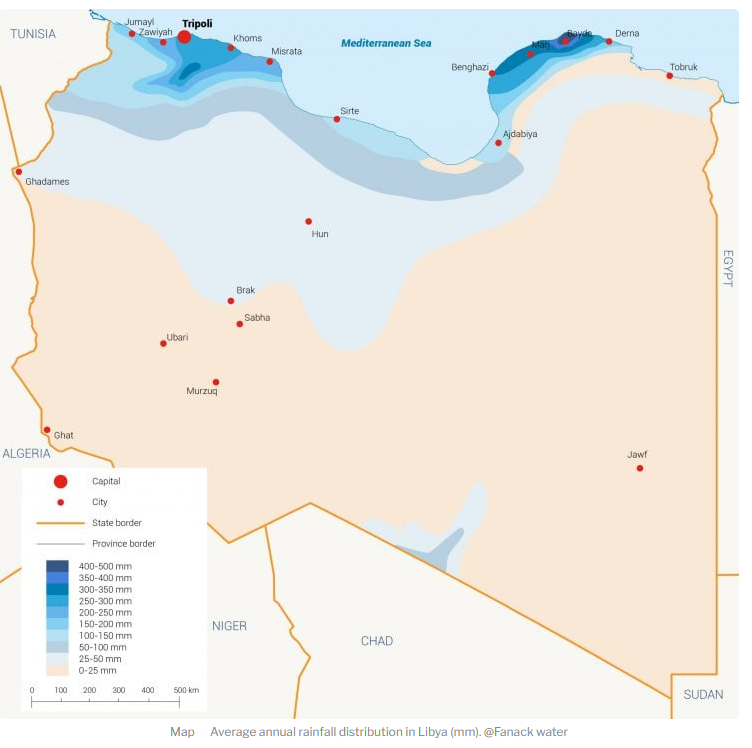
  • Drought & Reduced Rainfall: Rainfall in Libya is low and irregular, concentrated mainly in the north. Climate change is projected to further decrease rainfall, threatening recharge of aquifers.
  • Groundwater Stress: Over 95% of Libya’s water comes from non-renewable aquifers. Rising temperatures increase evapotranspiration, worsening depletion.
  • Water Quality Decline: Salinization of aquifers, intrusion of seawater in coastal areas, and contamination from poor infrastructure are becoming more severe with climate stress.
  • Agriculture Impacts: Agriculture consumes over 80% of available water, making farmers extremely vulnerable to climate-driven shortages.

libya rainfall map


Resources

UNICEF (2022). Water Scarcity and Climate Change in LibyaPDF

GWP (2021). IWRM for Climate ResiliencePDF

AfDB – Defining a New Approach to Water Management in LibyaPDF

Integrated Drought Management – Monitoring and Early WarningVideo

Al-Barouni (2015). Water Resources in Libya – Development, Evaluation, and Management. (Dar Al-Furjani Publishing, Tripoli)PDF

Friedrich Ebert Stiftung. (2021) Water crisis and infrastructure challenges in Libya.PDF

Lesson 2: Adaptation and Resilience Strategies in IWRM

Adaptation is about adjusting water management systems to withstand climate pressures. Libya’s resilience relies on the integration of data, technology, and people-centered governance.

1️⃣ Demand-Side Management

  • Install smart meters and repair urban water networks.
  • Promote efficient irrigation techniques like drip and sprinkler systems.
  • Introduce public awareness campaigns to reduce domestic water wastage.

2️⃣ Supply-Side Innovation

  • Expand desalination and rainwater harvesting in coastal and mountain areas.
  • Encourage reuse of treated wastewater for agriculture and landscaping.
  • Protect natural recharge zones (wadis and oases).

3️⃣ Institutional Strengthening

  • Improve coordination among Ministry of Water Resources, Municipalities, and Environmental Agencies.
  • Encourage cross-sector partnerships with NGOs, academia, and private sector.
Resources

UNICEF (2022). Water Scarcity and Climate Change in LibyaPDF

GWP (2021). IWRM for Climate ResiliencePDF

AfDB – Defining a New Approach to Water Management in LibyaPDF

Integrated Drought Management – Monitoring and Early WarningVideo

Al-Barouni (2015). Water Resources in Libya – Development, Evaluation, and Management. (Dar Al-Furjani Publishing, Tripoli)PDF

Friedrich Ebert Stiftung. (2021) Water crisis and infrastructure challenges in Libya.PDF

Lesson 3: Drought Risk Reduction Approaches in Libya

  • Droughts are long-term and recurring in Libya — impacting agriculture, drinking water supply, and rural migration patterns.
  • Steps for DRR Implementation:
Stage Focus Actions
Risk Assessment Identify drought-prone areas Map Jefara, Fezzan, Kufra basins; collect data on rainfall and groundwater depletion
Preparedness Build early warning systems Install sensors, set drought thresholds, community alerts
Mitigation Promote drought-resilient livelihoods Introduce water-efficient crops, improve storage facilities
Response Emergency action Water trucking, well rehabilitation, NGO coordination
Recovery Restore & strengthen Train local communities in sustainable post-drought practices

Resources

UNICEF (2022). Water Scarcity and Climate Change in LibyaPDF

GWP (2021). IWRM for Climate ResiliencePDF

AfDB – Defining a New Approach to Water Management in LibyaPDF

Integrated Drought Management – Monitoring and Early WarningVideo

Al-Barouni (2015). Water Resources in Libya – Development, Evaluation, and Management. (Dar Al-Furjani Publishing, Tripoli)PDF

Friedrich Ebert Stiftung. (2021) Water crisis and infrastructure challenges in Libya.PDF

Lesson 4: Gender & Youth Inclusion in Climate-Resilient Water Management

Climate resilience depends on inclusive participation. Women and youth are key drivers of innovation and sustainability in water management.

Why Inclusion Matters:

  • Women: Manage household water and hygiene; often most impacted by scarcity.
  • Youth: Bring creativity, digital tools, and community engagement.

Libya-Specific Actions:

  • Involve women in local water committees and CSO networks.
  • Train youth in climate-smart agriculture and data collection.
  • Launch awareness campaigns in schools and mosques on water conservation.

Resources

UNICEF (2022). Water Scarcity and Climate Change in LibyaPDF

GWP (2021). IWRM for Climate ResiliencePDF

AfDB – Defining a New Approach to Water Management in LibyaPDF

Integrated Drought Management – Monitoring and Early WarningVideo

Al-Barouni (2015). Water Resources in Libya – Development, Evaluation, and Management. (Dar Al-Furjani Publishing, Tripoli)PDF

Friedrich Ebert Stiftung. (2021) Water crisis and infrastructure challenges in Libya.PDF

Quiz: Climate Change & Water Resources

Please log in to view this quiz. Access is restricted to registered users.